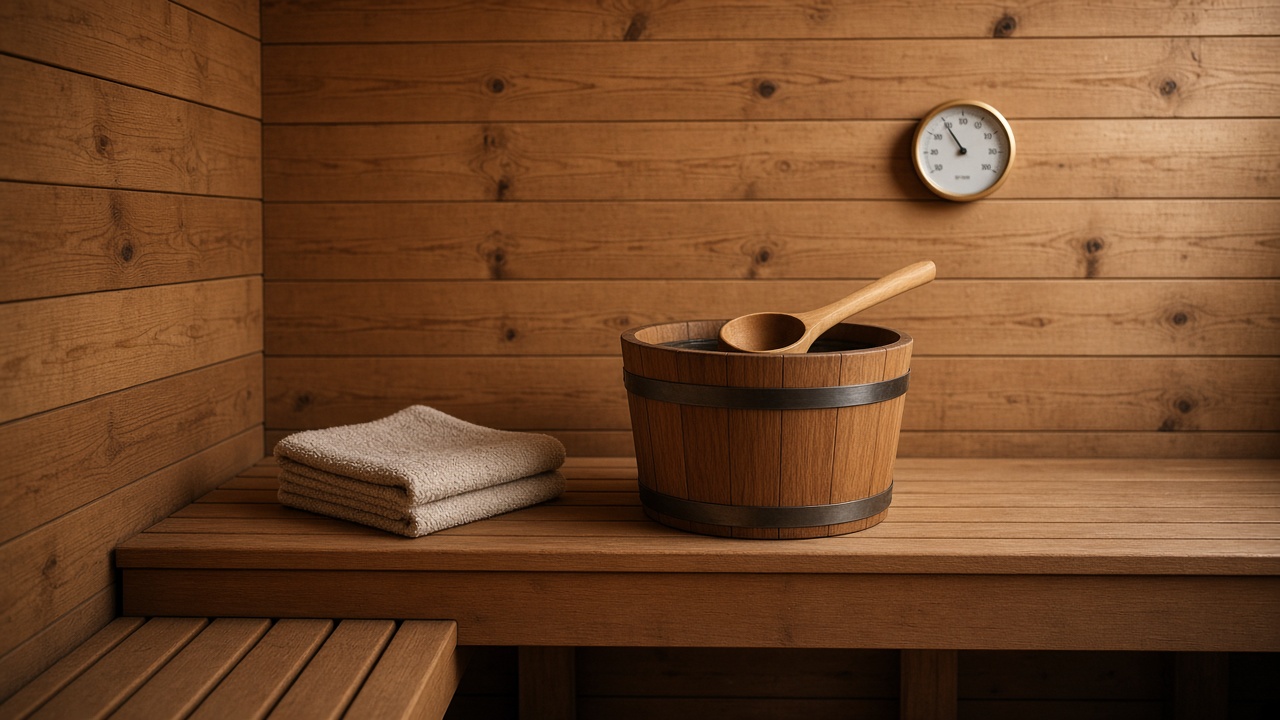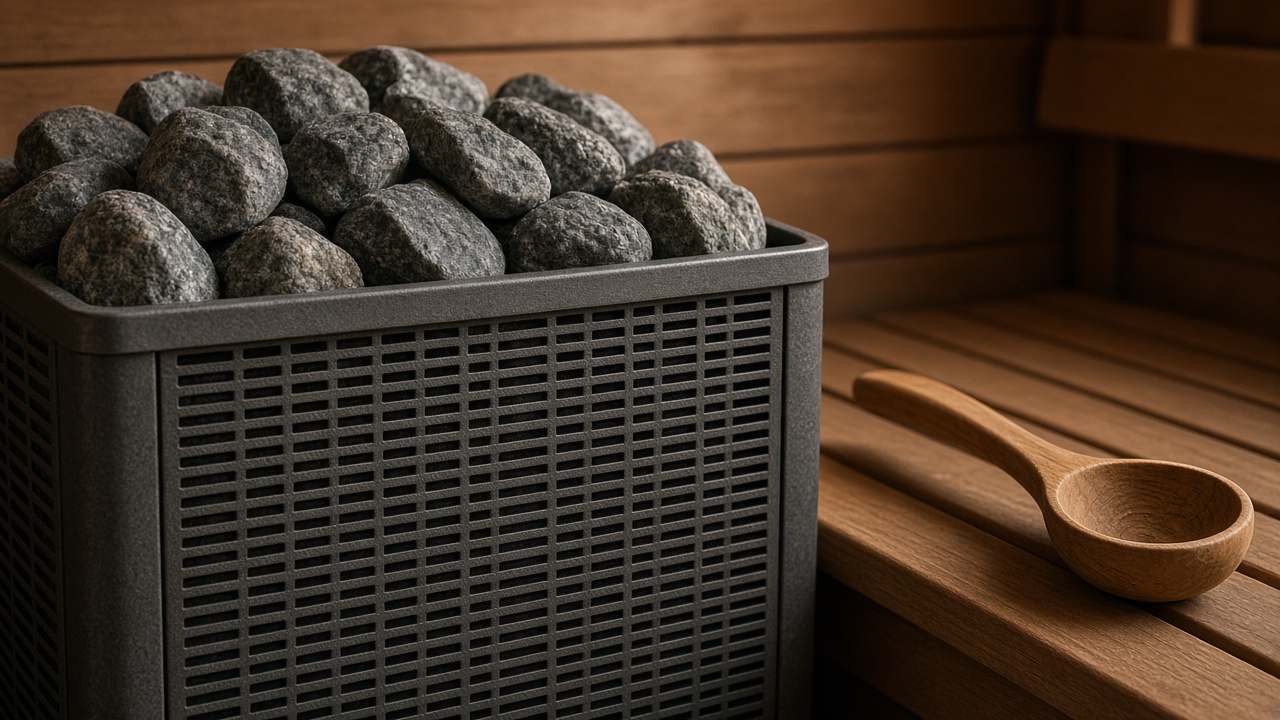
Quick answer: The right sauna stones are the ones your heater maker specifies: usually a hard igneous rock such as peridotite, olivine-diabase, or olivine, in the size and weight listed in the manual. Amounts vary widely. Harvia’s published heater/stone chart calls for as little as 44 pounds (20–23 kg) in a KIP, Wall, or TopClass heater and as much as 200 pounds (91 kg) in a 6–9 kW Cilindro. Stack them loosely so air can move and the elements stay covered, rearrange them at least once a year, and replace stones that have crumbled.
They store heat, soften the feel of the room, and, in a traditional sauna, turn a ladle of water into steam (löyly). The wrong rock, or the right rock packed too tightly, can damage the heater. This guide covers how to choose them, how many to use, how to stack them, and when to replace them, using manufacturer manuals we opened rather than guesses.
How to Choose Sauna Stones
Start with your heater manual, not a generic bag at the hardware store. Two Harvia documents we opened are specific about materials, size, and what to avoid.
Harvia’s Spirit heater owner’s manual lists suitable stone materials as peridotite, olivine diabase, and olivine. It says ceramic “stones” and soft soapstone are not allowed because they “do not absorb enough heat,” and that soft stones “may crumble and block the air vents,” which can break the heating elements. For the Spirit, only rounded stones 2–4 inches (5–10 cm) across are allowed; stones with a cleavage (split) surface are not.
Harvia’s KIP heater manual is equally firm in a different way: use only stones purchased from an official Harvia distributor, wash them, and never run the heater without stones in place. It describes those stones as igneous rocks. Almost Heaven, which ships Harvia KIP heaters with many of its kits, sells a 40-pound box of standard sauna stones on its official site (listed at $135 on November 22, 2026). If your heater is a Harvia, buying the brand’s specified box is the conservative path and helps keep the heater warranty intact. Almost Heaven’s warranty page specifically excludes coverage when stone placement is improper.
A practical checklist when you shop:
- Material. Look for peridotite, olivine-diabase (also written olivine diabase), or olivine, or a kit your heater maker sells. Skip unknown landscaping rock, river stone of unknown type, and decorative ceramic or soft soapstone unless the heater maker expressly approves that product.
- Size. Match the diameter in the manual. The Spirit and many Harvia electric heaters use 2–4 inch (5–10 cm) stones. Harvia’s stone chart uses 4–6 inch (10–15 cm) stones for some larger series, including Virta and several wood-burning models.
- Condition. Stones should be clean and intact. Both manuals tell you to rinse off dust before loading the heater.
If you are still choosing a heater or a kit, our Almost Heaven Hillsboro write-up and installation guide cover how the heater is sized to the room.
How Many Stones Does Your Heater Need?
Do not estimate “a full basket.” Use the weight in the manual. Harvia’s heater / stone chart (a Bathing Brands PDF we opened) lists minimum required stones by series. Selected electric-heater figures:
| Harvia series | Minimum stones | Typical stone size | Stone type code on the chart |
|---|---|---|---|
| Vega (1.7–3.5 kW) | 29 lb (13 kg) | 2–4 in (5–10 cm) | AC3000 |
| The Wall (6–8 kW) and TopClass (4.5–8 kW) | 44 lb (20 kg) | 2–4 in (5–10 cm) | AC3000 |
| KIP (3, 4.5, 6, and 8 kW) | 44 lb (23 kg) | 2–4 in (5–10 cm) | AC3000 |
| Spirit (6, 8, and 9 kW) | 110 lb (50 kg) | 2–4 in (5–10 cm) | R-991 |
| Virta and Virta Combi (6, 8, and 9 kW) | 100 lb (45 kg) | 4–6 in (10–15 cm) | AC3020 |
| Virta and Virta Combi (10.5 kW) | 150 lb (68 kg) | 4–6 in (10–15 cm) | AC3020 |
| Cilindro (6, 8, and 9 kW) | 200 lb (91 kg) | 2–4 in (5–10 cm) | AC3000 |
| Cilindro (10.5 kW) | 264 lb (120 kg) | 2–4 in (5–10 cm) | AC3000 |
| Club (10, 12.5, and 15 kW) | 132 lb (60 kg) | 2–4 in (5–10 cm) | AC3000 |
| Forte (4.5, 6.5, and 10 kW) | 220 lb (100 kg) | 4–6 in (10–15 cm) | AC3020 |
The same chart lists even larger loads for some wood-burning heaters, including 440 lb (200 kg) for a 21 kW Legend and 572 lb (259 kg) for a 23.5 kW Legend. The Spirit manual also notes that “50 kg is a suitable amount” for that heater and that “the amount of stones varies, depending on the type of stone.”
Two details are easy to miss:
- A KIP and a Spirit can have a similar kilowatt rating and still need very different stone loads (about 23 kg versus about 50 kg). Buy for the series, not just the kW.
- The chart’s “required boxes” column is a packing guide (for example, one 44 lb box for a KIP). If you already own a 40 lb box, you may still be a little short of a KIP’s 44 lb figure; check the scale or add a few stones from a second box.
How to Stack Sauna Stones
The goal is the same across the manuals we opened: cover the heating elements, leave room for air, and do not force rocks into place. The exact order differs slightly, which is a good reason to follow the booklet that came with your heater.
Harvia’s KIP manual says to wash the stones, place them “between and around heating elements,” and “do not force rocks between elements.” It tells you to start with smaller stones and then add larger ones until they sit about 2 inches (50 mm) below the rock guard. Stones should sit loosely so air can circulate, and they should completely cover the elements. “Pouring water over exposed elements could cause heater damage.”
Harvia’s Spirit manual starts the other way around: begin with the biggest stones at the bottom and sides to form a stable base and keep ventilation open. Place stones closely against the steel grid and loosely at the top and in the middle. “Make sure the heating elements are not visible between the stones.” A dense outer layer is meant to block direct heat radiation from overheating nearby materials, while a looser center lets air flow through. Place stones one by one; do not dump them in. Before the first use, confirm that stones cannot fall out.
Shared rules that showed up in both places:
- Rinse off dust first.
- Never operate the heater without stones.
- Do not put objects in the stone space that would block airflow.
- Keep a few spare stones. The Spirit manual notes that the stone level “is likely to become lower in about two months after the stones have been placed.”
If you pour water for steam, the KIP manual is strict about what goes on the rocks: use only clean tap water, not pool, spa, or well water, “as chlorine gas can be produced and the heating elements can be damaged.” It also says to let the heater run at least 30 minutes before water goes on the stones, and to use only one or two dippers at a time. For session habits around heat and steam, see our guide on how to use a sauna.
When to Rearrange and Replace Them
Stones break down in use. The Spirit manual puts it plainly: “Due to large variation in temperature, the sauna stones disintegrate in use.” Its maintenance instruction is to rearrange the stones at least once a year, and more often if you sauna frequently, and to replace any stones that have disintegrated. That keeps heating performance up and reduces the risk of overheating. Check now and then that the pile has not settled enough to expose an element.
The KIP manual’s maintenance list says heaters need no special maintenance when properly installed, but adds: “After 5 years of usage, the rocks may need replacing if they have crumbled or powdered.” Treat that as a “may need,” not a guaranteed five-year life. If you heat the room daily, inspect sooner. Signs it is time to restack or replace include crumbled or powdery rocks, a pile that has sunk, visible heating elements, slower room heat, or water that runs straight through instead of flashing into steam.
When you restack, take the stones out, discard anything broken, rinse the keepers, and reload to the manual’s pattern and fill height. If you are short, add new stones of the same approved type and size rather than mixing in random rocks.
Common Mistakes
- Using the wrong material or size. Soft or decorative stones can crumble and block air, which the Spirit manual warns can damage elements.
- Packing the tray tight, or leaving elements visible. The KIP manual says stones packed too tightly restrict airflow; both manuals treat exposed elements as a safety issue.
- Forcing stones between elements, which the KIP manual warns can cause damage.
- Pouring pool, spa, or well water on the rocks. The KIP manual calls out chlorine gas and element damage.
- Skipping yearly maintenance. Settling and breakage are expected.
Choose the material and weight your heater was designed for, stack them so air can move, and plan on a yearly teardown.
FAQ
Can I use lava rock or soapstone?
Only if your heater maker lists that material. Harvia’s Spirit manual allows peridotite, olivine diabase, and olivine, and it specifically disallows ceramic stones and soft soapstone.
How many kilograms of stones do I need per kilowatt?
There is no single kg-per-kW rule in the manuals we opened. A 6 kW KIP is listed at 23 kg; a 6 kW Spirit at 50 kg; a 6 kW Cilindro at 91 kg. Use the figure for your series.
Do infrared saunas need heater stones?
Standard infrared cabins heat with panels, not a rock basket, so they do not use sauna stones. Traditional and many hybrid rooms with a rock heater do. If you are comparing those setups, see our infrared sauna vs traditional sauna guide.
Why did my stones crack after the first few sessions?
The Spirit manual says occasional bangs are “most likely caused by stones cracking due to heat.” Some cracking is normal. Replace pieces that have broken down, and rearrange the pile so fragments are not blocking airflow.