Quick answer: The sauna accessories that change a session the most are a bucket and ladle, a thermometer (and, if you like, a hygrometer), a backrest or headrest, and a simple timer. Lighting, a floor kit, a barrel cover, and sauna-specific fragrance are optional, and each has a safety catch. This is a buying-criteria guide, not a ranked list of Amazon products. We have already reviewed sauna hats and sauna suits separately, so those are not rehashed here.
A traditional room can feel complete the day the heater works, then feel unfinished the first time you want steam, cannot tell how hot the upper bench is, or find the wall uncomfortably straight against your back. The items below are the usual answers. Official Almost Heaven accessory prices, noted where we opened the product page on November 22, 2026, are examples from one brand’s catalog, not a claim that you must buy that kit.
Sauna Accessories Worth Buying First
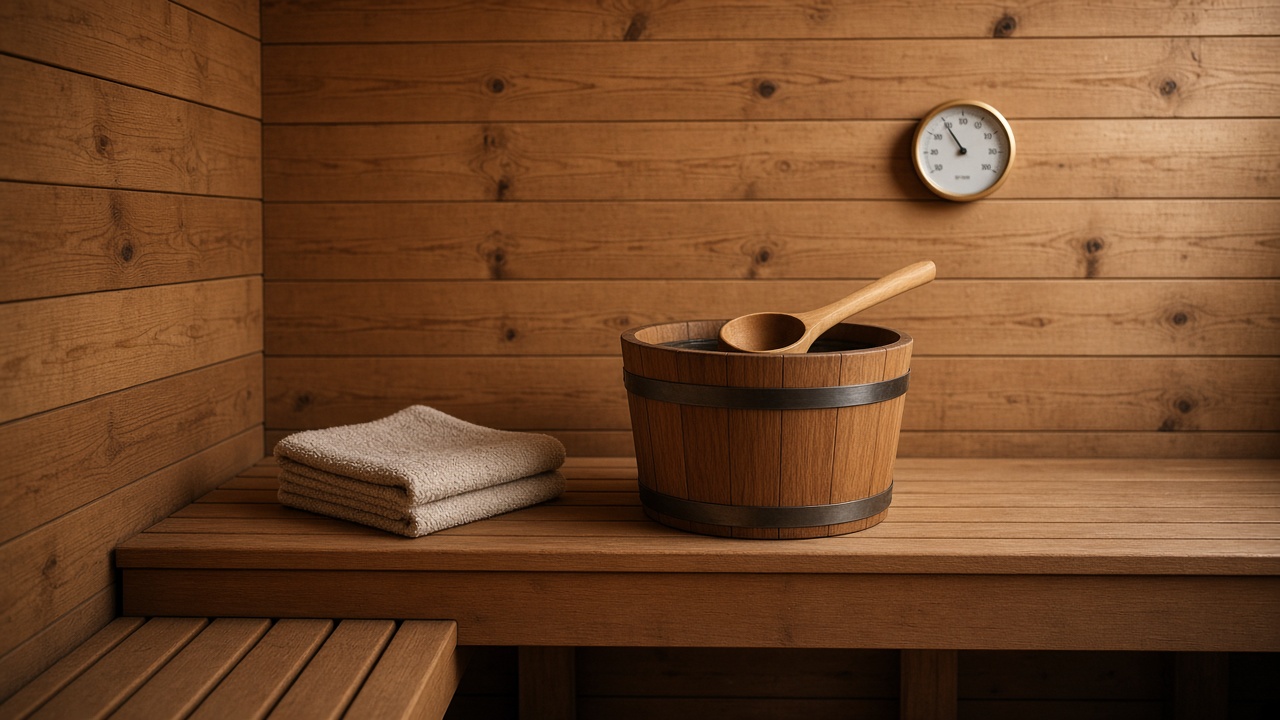
Harvia’s KIP heater manual is unusually direct: “bucket, ladle and thermometer are essential.” That is a solid starting kit, whether you own a Harvia heater or another traditional stove. Almost Heaven sells a bucket, ladle, and thermometer package listed at $128, or the 4-inch chrome thermometer alone at $54. Other heater and sauna makers sell the same three items; what matters is heat-safe materials and correct placement, not the logo.
Bucket and ladle
These exist for löyly: a dipper of water on hot stones. What to look for:
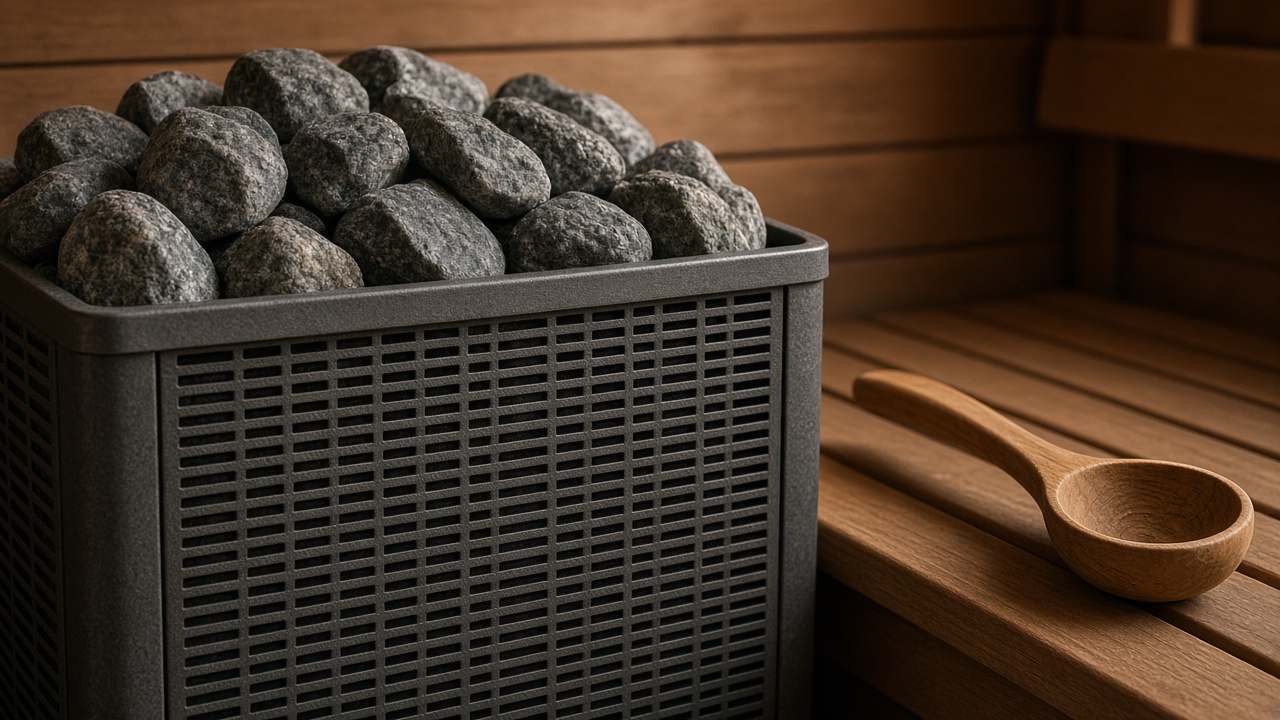
- Wood or another heat-safe sauna design, with a long enough handle that your hand stays away from the rocks. The KIP manual warns you not to set a wooden bucket or dipper on the heater (“Avoid fire, do not place any combustible material over the sauna heater”).
- A liner if the bucket is wood. The same manual recommends a plastic bucket liner “to prevent water leakage,” and says to dump the water after every use and scour the bucket and dipper occasionally.
- A modest dipper. The KIP manual says to pour only one or two dippers at a time, and only after the heater has been on at least 30 minutes. More water than the stones can flash into steam can splash as boiling water.
Use only clean tap water. The KIP manual says not to use pool, spa, or well water, “as chlorine gas can be produced and the heating elements can be damaged.”
Thermometer and hygrometer
A thermometer tells you whether the room is in a sensible range; a hygrometer tells you how dry or humid it is after you throw water. Traditional saunas, according to Cleveland Clinic, are typically 150°F to 195°F with humidity often under 20%. Infrared rooms are typically 110°F to 135°F and usually do not use a rock bucket.
Placement matters as much as the instrument. The KIP manual says the thermometer should sit over the heater, 6 inches (150 mm) from the ceiling, “for correct temperature reading,” and that thermometers may need calibration. It also notes that readings vary with room height and location — for example, 180°F above the heater may correspond to a lower temperature on the bench. Do not assume the wall reading is exactly the air at face level.
What to look for: a sauna-rated thermometer or a combined thermo-hygrometer, with markings you can read from the bench, and a way to mount it in that high, near-heater position. Cheap indoor weather gadgets not rated for sauna heat are a poor bet.
Backrests and headrests
A backrest changes comfort more than almost any other wooden add-on, especially in a barrel, where the wall curves away from you. Almost Heaven’s cedar sauna back rest was listed at $149. Whatever brand you choose, look for:
- The same family of wood as the benches, or another unfinished sauna softwood, so the piece does not feel hotter or shed a different finish.
- Open slats that let air move and dry after the session.
- A stable hang or hook so it cannot drop onto the heater.
- No varnish or oil that can smell or soften in the heat. If you already have benches in cedar or hemlock, stick with an unfinished sauna softwood and skip interior treatments, which can smell or soften in the heat.
A headrest or neck rest is optional. Look for a low profile that does not push your head closer to the hottest ceiling air if you are still getting used to the heat.
Sand timer or clock
The KIP manual lists a sand timer among useful extras. It will not make the room safer by itself, but it makes it easier to follow a planned session instead of guessing. Almost Heaven’s sauna sand timer was listed at $77. A sand timer is traditional and has no battery to worry about; a sauna-rated clock or a timer you leave outside the room also works. Medical sources discussed in our guide on how long to stay in a sauna generally cap a traditional session around 15–20 minutes, with a much shorter start for beginners, so a 15-minute glass is a practical default.
Lighting
Most home kits already include a light. Almost Heaven, for example, lists an interior LED with its barrels and indoor rooms. If you add or replace lighting, look for a fixture rated for sauna temperatures and wet or damp use, and follow the heater manual on placement. The KIP manual notes that heat can shorten lamp life and recommends placing lights lower in the room, away from the heater — “under benches is ideal” — and at least 6 inches (150 mm) from the ceiling for fixtures that can be used that close. Skip decorative string lights or household bulbs that were not specified for a sauna.
Floor kits, covers, and hooks
These do not change the heat, but they can protect the room. Almost Heaven listed an indoor sauna floor kit from $529, a barrel sauna floor kit from $459, a barrel rain jacket from $337, and a double robe hook at $54. The KIP manual recommends a floor that is easy to clean (concrete, tile, or poured flooring) and specifically advises against carpet, which it calls a breeding ground for bacteria, and against wooden duckboard flooring for the same hygiene reasons. A duckboard or slatted floor kit is still common in home saunas; if you use one, lift and dry it regularly. An outdoor cover is worth considering if the maker says the wood can weather untreated but you want to slow that process.
Essential Oils and Fragrances: Use Caution
This is the accessory category that most often goes wrong. Almost Heaven sells individual bottles of essential oils (listed at $54 on the day we checked), and many spa shelves are full of eucalyptus blends marketed for saunas.
The heater manuals we opened do not treat fragrance as a free-for-all. The KIP manual allows only clean tap water on the stones and warns that chemicals in other waters can release chlorine gas and damage elements. It also tells you not to put combustible material on the heater. Unless your heater or fragrance maker gives written directions for a sauna scent — usually a small amount diluted in the bucket, never a puddle of undiluted oil on hot rocks — leave the oils out. Undiluted oil can smoke, smell harsh, and make the stones or elements harder to keep clean.
If you do use a product sold as a sauna fragrance, follow that label, keep the dose small, and skip it entirely if anyone in the room is sensitive to scents or has asthma. Fragrance is optional; steam from clean water is not a requirement either.
What You Can Skip (and What We Cover Elsewhere)
You do not need a matching set of every wooden extra on a catalog page (magazine racks, thermometer-and-clock combos in every wood species, decorative signs). Start with water gear, a thermometer, and a way to time the session; add a backrest if the wall is uncomfortable.
Two popular add-ons are already covered on this site and are easy to over-buy if they are lumped into a generic “accessories” list:
- A sauna hat can make a hot traditional room more comfortable by insulating your head. It is not required, and it is a personal-fit item.
- A sauna suit is a workout garment, not a room accessory, and it comes with its own heat and hydration risks.
For first-session habits — water, towels, and when to get out — see how to use a sauna.
A Simple Buying Order
- Bucket, ladle, and a sauna thermometer, placed 6 inches from the ceiling above or near the heater.
- A timer you will actually use, and a backrest if the benches feel upright or curved in the wrong way.
- Lighting or a floor kit only if the room still needs them after the heater is running.
- A cover or hooks if you are outdoors or short on hanging space.
- Fragrance last, and only with directions that match your heater.
Prices move, and we are not listing Amazon figures here. If you buy from a brand site, use the live product page. The better test is whether the item is rated for sauna heat, is easy to keep clean, and does not end up on top of the heater.
FAQ
What sauna accessories do I actually need?
For a traditional sauna, a bucket, ladle, and thermometer are the ones Harvia calls essential. A timer and a backrest are the next most useful. Infrared cabins often need only a thermometer and a timer, because there are no stones to ladle water onto.
Can I use a regular kitchen thermometer or wooden salad bowl?
Use tools rated for sauna temperatures. A household thermometer can fail or read badly in 180°F air, and a bowl that cannot take heat or is finished with a food oil can be a poor, sometimes unsafe, substitute for a sauna bucket.
Where should the thermometer go?
Harvia’s KIP manual: over the heater, 6 inches (150 mm) from the ceiling. Expect that reading to be higher than the air on a lower bench.
Are essential oils safe in a sauna?
Only if the product is meant for sauna use and you follow the directions, almost always diluted in water — not poured straight on the stones. If your heater manual allows only clean tap water, treat that as the rule.