This post contains affiliate links. As an Amazon Associate we earn from qualifying purchases. Learn more.
Quick answer
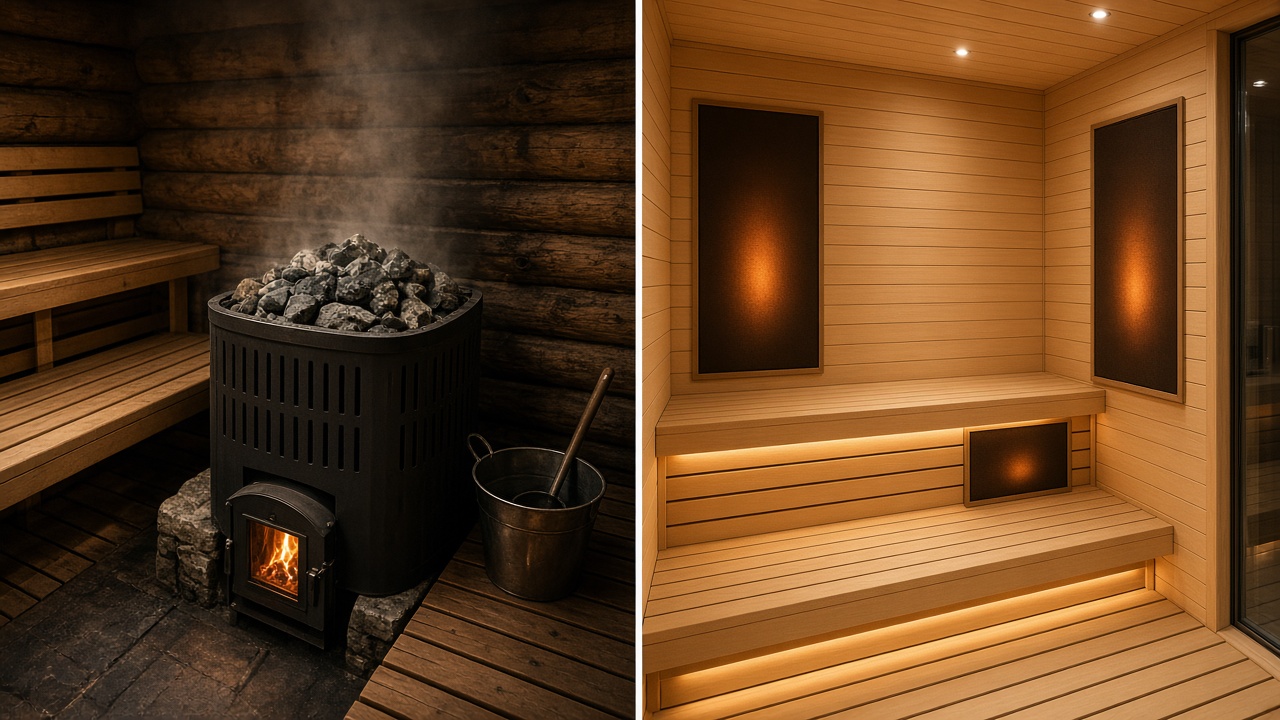
The main difference in the infrared sauna vs traditional sauna debate is how you get warm. A traditional sauna heats the air around you to roughly 150°F to 195°F, and you can add steam by pouring water on hot stones. An infrared sauna uses panels that warm your body more directly, so the air stays cooler, around 110°F to 135°F. Both make you sweat and both can be relaxing. Choose traditional if you love intense heat and steam; choose infrared if you prefer gentler heat, a smaller footprint and easier installation at home.
How each type of sauna works
Traditional sauna
A traditional (Finnish) sauna uses an electric, wood-burning or gas heater to heat the air in a wood-lined room. The heater warms a bed of stones, and ladling water over the stones creates a burst of steam that makes the room feel hotter. You warm up mainly through the hot air. Cleveland Clinic puts typical traditional sauna temperatures at 150°F to 195°F.
Infrared sauna
An infrared sauna uses infrared lamps or panels to produce radiant heat. As Mayo Clinic explains, it heats your body directly without warming the air as much, so you get vigorous sweating and a higher heart rate at lower temperatures. Cleveland Clinic lists a typical range of 110°F to 135°F. That makes infrared a popular choice for people who find a traditional sauna too hot.
Infrared sauna vs traditional sauna: 7 key differences
| Traditional sauna | Infrared sauna | |
|---|---|---|
| 1. How it heats | Heats the air with a stove and stones | Infrared panels warm your body more directly |
| 2. Typical temperature | About 150°F to 195°F | About 110°F to 135°F |
| 3. Humidity and steam | Dry, but you can add steam by pouring water on the stones | Dry heat; no water on the panels |
| 4. How it feels | Intense, enveloping heat | Gentler warmth that many people tolerate longer |
| 5. Power and installation | Larger heaters often need a dedicated higher-voltage circuit and an electrician | Many small cabins and portable units run on a standard household circuit |
| 6. Space and cost | Usually a permanent room or outdoor cabin | Options range from fold-up tents and blankets to wooden cabins |
| 7. Research base | Most long-term health research was done on traditional saunas | Promising but smaller studies; larger ones are needed |
Always check the specific model’s manual for power needs, clearances and temperatures, since these vary from one sauna to the next.
Heat, comfort and session length
The biggest day-to-day difference is how the heat feels. A traditional sauna’s hot air hits you as soon as you walk in, and a ladle of water on the stones turns it up another notch. Many sauna fans love that intensity. An infrared sauna feels milder. You still sweat, but the air is cooler and easier to breathe, which some people find more comfortable for longer sessions.
Either way, keep sessions sensible. Harvard Health’s general advice is to stay in no more than 15 to 20 minutes, avoid alcohol, cool down gradually and drink two to four glasses of water afterward (Harvard Health). For infrared, Cleveland Clinic suggests starting at around 110°F for 5 to 10 minutes and building from there. Our guide to how to use a sauna covers a full session step by step.
Health benefits: what we know
Both types raise your heart rate and make you sweat, which is why people compare a session to light exercise. Here is what the evidence supports so far:
- Traditional saunas have the longest track record. A Finnish study that followed 2,315 men for about 20 years linked frequent sauna bathing with lower rates of fatal heart disease (JAMA Internal Medicine, 2015). This shows an association, not proof that the sauna caused the benefit.
- Infrared research is promising but limited. Mayo Clinic notes that infrared saunas have been studied for high blood pressure, heart failure, headache, type 2 diabetes and arthritis, with some positive results, but larger and more exact studies are needed. It also says no harmful effects have been reported with infrared saunas.
- Relaxation and soreness. Cleveland Clinic says infrared saunas may help some people relax and ease post-workout muscle soreness, and that both types can have similar effects. “Hotter doesn’t necessarily mean better,” as one of its doctors puts it.
- Detox claims are overstated. You sweat in both, but sweat is mostly water and your liver and kidneys do the real work of clearing toxins. There is no good evidence that infrared removes more toxins than traditional heat. Our sauna detox article explains why.
If health is your main reason for buying, our article on infrared sauna benefits goes deeper.
Energy use, installation and cost
Infrared saunas are usually easier to fit into a home. Many compact cabins use a standard 120V circuit; for example, the Dynamic Barcelona 1-2 person cabin lists 120V/15A. Portable infrared tents and blankets plug into a regular outlet and fold away. Because the panels warm you rather than the whole room, infrared units also tend to be ready to use sooner.
Traditional saunas usually need more planning. Larger electric heaters often require a dedicated circuit installed by an electrician, and the room needs proper ventilation. A wood-burning sauna needs a chimney and fire clearances. You also get a more classic experience in return, including steam. Our sauna installation guide walks through the process.
On cost, infrared gives you more entry points. Portable tents and blankets cost a few hundred dollars, while wooden cabins of either type usually cost much more. See our guide to the best home saunas under $1,000 for budget picks.
Best infrared and traditional-style saunas for home
Here are home options from both sides of the comparison. Check current prices, availability and reviews on the listing before you buy.
1. Dynamic Saunas Barcelona 1-2 Person Infrared Sauna
- Type: infrared cabin
- Capacity: 1 to 2 people
- Features: Canadian hemlock, six low-EMF carbon heating panels, Bluetooth speakers, chromotherapy lighting, 120V/15A
A compact wooden cabin that suits a spare room or basement corner. View on Amazon
2. KUNSANA 2-Person Infrared Sauna
- Type: infrared cabin
- Capacity: 2 people
- Features: Canadian hemlock, seven carbon-crystal heating panels, LCD and app control, 7-color chromotherapy lighting, Bluetooth speakers, two reading lights, 47.4″ × 38.3″ × 76.4″, 1820W / 110–120V with a standard 15-amp plug, up to 145°F
A 2-person indoor cabin with tongue-and-groove hemlock construction and two tempered glass doors. The listing also notes overload protection and automatic shut-off. Check the current price on Amazon. View on Amazon
3. Dynamic Saunas Maxxus MX-K306-01 Elite 3-Person Infrared Sauna
- Type: infrared cabin
- Capacity: 3 people
- Features: Canadian hemlock, seven PureTech near-zero EMF FAR infrared carbon heating panels, interior chromotherapy lighting and exterior accent lighting, FM radio with Bluetooth and MP3 aux input, built-in speakers; overall size 64″ × 44″ × 75″ (add 5.9″ for the roof overhang); operates up to 140°F, with a recommended range of 118–135°F
A larger indoor cabin for three people. This listing is delivered curbside on a pallet. Check the current price and the spec sheet for electrical requirements. View on Amazon
4. SereneLife Infrared Home Spa Sauna
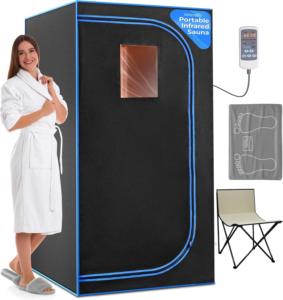
A compact, budget-friendly portable infrared sauna with a chair and foot pad. View on Amazon
5. Relax Far Infrared Sauna
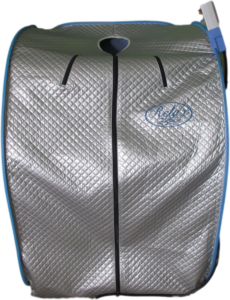
A portable far infrared sauna in a silver fabric enclosure. View on Amazon
6. Durasage Portable Infrared Sauna
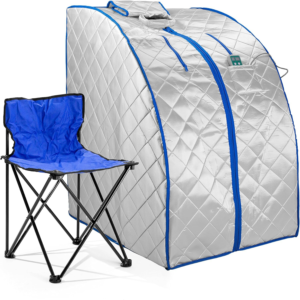
A cost-effective portable infrared unit with a heating foot pad and chair. View on Amazon
7. X-Vcak Portable Steam Sauna
- Type: portable steam tent
- Capacity: 1 person
- Features: steam generator, folding chair, adjustable heat levels
Not a traditional dry sauna, but an affordable way to get moist heat at home. If you want true traditional heat, look at a cabin or barrel sauna with an electric heater, like the models in our outdoor sauna guide. View on Amazon
Which sauna is best for you?
Choose a traditional sauna if:
- You love intense heat and want the option of steam.
- You have room for a permanent sauna and are happy to involve an electrician.
- You want the classic Finnish experience the long-term research is based on.
Choose an infrared sauna if:
- You prefer gentler heat or find traditional saunas hard to tolerate.
- You have limited space or want something portable.
- You want simpler installation on a standard circuit.
Some spas and higher-end home models offer hybrid saunas that combine infrared panels with a traditional heater, so you can switch between styles.
Tips for using either sauna
- Hydrate: drink water before and after your session.
- Start slow: begin with 5 to 10 minutes and build up to no more than 15 to 20.
- Set a comfortable temperature: start at the low end of your sauna’s range and adjust.
- Add comfort: a towel to sit on, and a scent you like. Some people enjoy a few drops of lavender in a steam room or diffuser; never put undiluted oil on a heater.
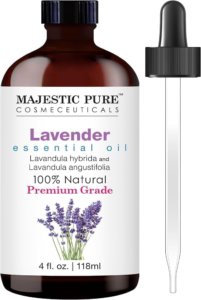
If you want a scent for your sessions, the Majestic Pure Lavender Essential Oil is a popular choice.
Check with your doctor first if you have heart disease, uncontrolled blood pressure, multiple sclerosis, are pregnant or are trying to conceive. Cleveland Clinic flags all of these as reasons for caution with infrared saunas, and the same care applies to traditional heat. Our sauna safety tips for beginners cover the basics.
Frequently asked questions
Is an infrared sauna as good as a traditional sauna?
They are different rather than better or worse. Both make you sweat and raise your heart rate. Traditional saunas have more long-term research behind them, while infrared saunas run cooler and are easier to install at home.
Which sauna is better for weight loss?
Neither is a weight loss tool. Most of the weight you lose in a session is water, which comes back when you rehydrate. Our sauna and weight loss article explains more.
Does an infrared sauna use less electricity?
Often, yes, because many infrared units have lower-wattage heaters and do not have to heat the whole room’s air as much. Compare the wattage on the spec sheets of the models you are considering to be sure.
Can you pour water in an infrared sauna?
No. Infrared panels are not designed for water. If you want steam, you need a traditional sauna with stones or a steam unit.
Final thoughts
Choosing between an infrared sauna and a traditional sauna comes down to the heat you enjoy, the space you have and how much installation you are willing to take on. Traditional saunas deliver the classic hot, steamy experience. Infrared saunas offer gentler heat and easier setup. Whichever you pick, keep sessions short, drink water, and enjoy the time to relax.
This article is general information, not medical advice. Talk with your doctor before using a sauna if you have a health condition, are pregnant or take medication. See our medical disclaimer.