As an Amazon Associate we earn from qualifying purchases.
Quick answer: In the cedar vs hemlock sauna debate, both woods make good sauna interiors, and the right pick depends on where the sauna will sit and what you want it to smell like. Western red cedar is lighter, more stable and naturally more decay-resistant, with a strong aromatic scent, which is why it’s the usual choice outdoors. Hemlock is harder, pale, has no characteristic odor and is common in budget indoor infrared cabins, but it isn’t rated as decay-resistant, so it belongs in a dry, indoor setting.
Here’s how the two compare on the numbers, how each holds up indoors and outdoors, and what to check before you buy.
Cedar vs Hemlock Sauna Wood at a Glance
The figures below come from The Wood Database species pages for western red cedar, eastern hemlock and western hemlock, plus the decay ratings in the USDA Forest Service Wood Handbook, Chapter 14. Sauna listings often say “Canadian hemlock” without naming the exact species, so both hemlocks are shown.
| Property | Western red cedar | Eastern hemlock | Western hemlock |
|---|---|---|---|
| Average dried weight | 23 lbs/ft³ | 28 lbs/ft³ | 29 lbs/ft³ |
| Janka hardness | 350 lbf | 500 lbf | 540 lbf |
| Volumetric shrinkage (green to oven-dry) | 6.8% | 9.7% | 12.4% |
| Decay resistance (Wood Database) | Durable to very durable | Non-durable | Non-durable |
| USDA Wood Handbook grouping | Resistant | Slightly or nonresistant | Slightly or nonresistant |
| Odor | Strong, lingering, aromatic | No characteristic odor | No characteristic odor |
4 Differences That Matter in a Sauna
1. Scent
This is the difference most people notice first. The Wood Database describes western red cedar as having “a strong, lingering, aromatic scent,” while both hemlocks have “no characteristic odor.”
If the woodsy smell is part of the experience for you, cedar delivers it. If anyone in the house dislikes strong scents, a neutral hemlock room may be more pleasant.
2. Stability and cracking
A sauna cycles between hot, dry air and normal room humidity again and again, so wood that moves less with moisture changes tends to stay flatter and tighter. Western red cedar’s volumetric shrinkage (6.8%) is lower than eastern hemlock (9.7%) and western hemlock (12.4%). That suggests cedar should move less as humidity swings, although kiln-drying, board size and build quality matter a lot too.
Sauna heater makers care about moisture content as well. Harvia’s KIP heater manual calls for kiln-dried tongue-and-groove softwood paneling with moisture content not exceeding 11%.
3. Rot and weather resistance
Indoors, in a room that dries out after every session, rot rarely becomes an issue. Outdoors it’s a different story. The USDA Wood Handbook groups western redcedar heartwood as “resistant” to decay, while hemlocks fall in the “slightly or nonresistant” group. The Wood Database rates western red cedar “durable to very durable” and both hemlocks “non-durable.”
That’s why cedar dominates outdoor and barrel saunas. If you’re shopping for one, our roundup of top-rated outdoor saunas is a good place to compare models.
4. Hardness and dents
Hemlock is the harder wood: 500 to 540 lbf on the Janka scale versus 350 lbf for western red cedar. The Wood Database notes that cedar “dents and scratches very easily due to its softness.” For benches that see a lot of use, hemlock resists dents better, although the same source notes that eastern hemlock tends to splinter easily when worked, so finish quality matters.
Which Wood Is Better Indoors?
For an indoor sauna, either wood works well. Hemlock is a common choice for indoor infrared cabins. For example, the Dynamic Barcelona infrared sauna is listed as built from reforested Canadian hemlock and rated for indoor use only.
If you want to see what a budget hemlock cabin looks like, this 1-person Canadian hemlock far infrared indoor sauna on Amazon is a typical example. Its listing describes Canadian hemlock panels, five low-EMF far infrared heating panels at 1050W, a tempered glass door, Bluetooth audio, chromotherapy lighting and a 3-year warranty. Check the current price and the size options before you buy, because the listing offers several cabin sizes.
Professional sauna builders treat both as legitimate options. Finlandia Sauna’s contractor specifications list clear western red cedar, clear Alaska yellow cedar and clear western hemlock as approved wall and ceiling woods. Harvia’s manual includes cedar in its list of suitable softwoods, alongside spruce, pine, aspen and alder.
Indoors, the decision usually comes down to:
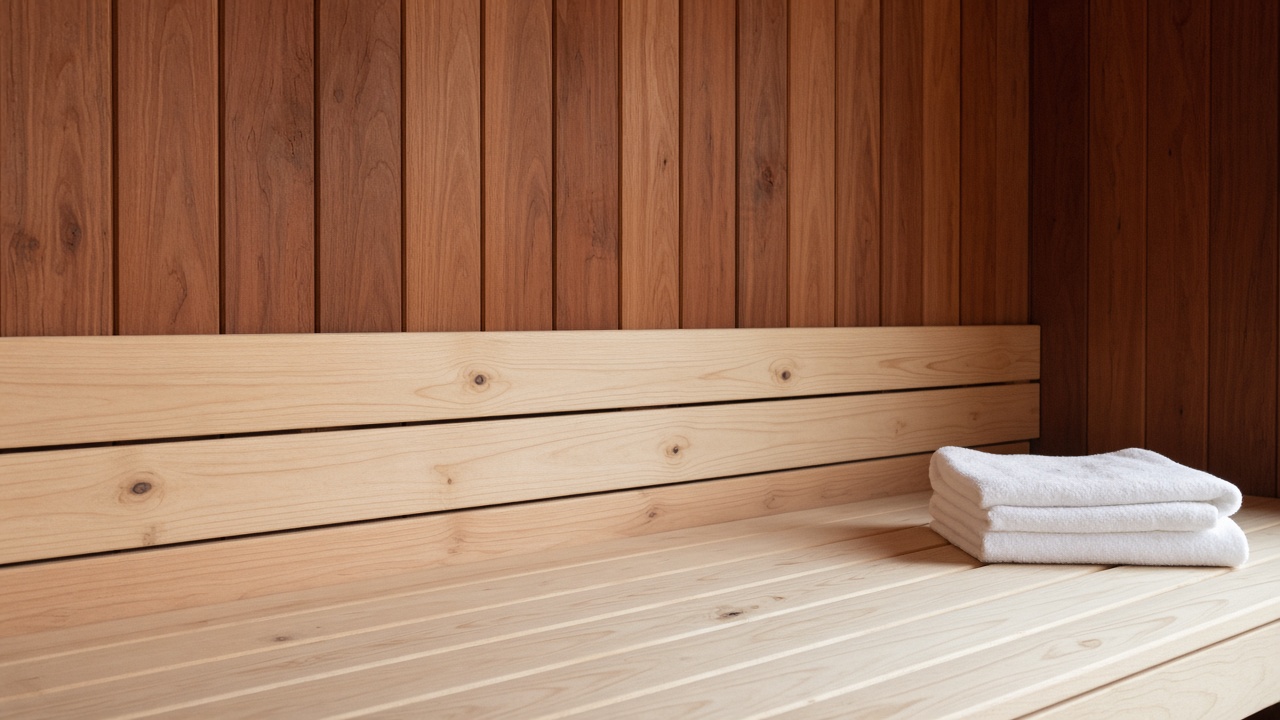
- Look: cedar heartwood is reddish to pinkish brown, often with darker streaks; hemlock is a lighter reddish brown with conspicuous growth rings.
- Smell: cedar is aromatic; hemlock is close to neutral.
- Budget: hemlock cabins are often the lower-cost option, so compare the same model in both woods if the maker offers it.
If you’re working with a set budget, see our guide to affordable home sauna kits.
Which Wood Is Better Outdoors?
For an outdoor sauna, cedar is the safer bet because of its higher natural decay resistance. Hemlock can be used outside only if the manufacturer specifically builds and warrants that model for outdoor use. Many hemlock cabins are labeled indoor only, as the Barcelona listing above shows. Putting an indoor-only cabin outside can damage the wood and may void the warranty, so read the manual before you decide where it goes.
What About Allergies and Sensitivities?
Wood dust and wood compounds can bother some people. The Wood Database notes that western red cedar contains many chemical compounds and cites research on occupational asthma in workers exposed to its dust. That research is about people who cut and sand the wood, not people sitting in a finished sauna. For hemlock, it notes reports of skin irritation, and for western hemlock, respiratory irritation and runny nose.
If you have asthma, allergies or known sensitivities to wood, sit in a sauna made from the wood you’re considering before you buy, and ask your doctor if you’re unsure.
How to Care for Either Wood
Whichever wood you choose, the care routine is similar:
- Don’t seal, paint or varnish the interior. Finlandia’s specifications say: “Do not use sealers, paint or varnish on interior wood, as toxic vapors could be dangerous in the high temperatures of a Sauna.”
- Use a sauna-specific bench oil if you treat benches at all. Harvia sells a paraffin oil for benches and recommends treating new benches before use and repeating the treatment once or twice a year.
- Sit on a towel. It keeps sweat off the wood.
- Clean gently and sand stains. Finlandia recommends occasional scrubbing of benches with a mild soap and says light sanding helps restore wood darkened by perspiration.
- Ventilate. Harvia’s manual says sauna room air should change six times per hour. Good airflow helps the wood dry between sessions.
- Choose low-knot benches. Harvia advises minimizing knots on seating areas because knots can become very hot.
Other Sauna Woods You’ll See on Listings
Cedar and hemlock aren’t the only options. You’ll often run into these too:
- Spruce. Almost Heaven’s Hillsboro 2 Person Indoor Sauna is described as “crafted from spruce lumber,” and spruce appears on Harvia’s list of suitable paneling softwoods.
- Hem-fir. The Wood Database notes that western hemlock is commonly grouped with other fir and hemlock species and sold under a more generic name. Almost Heaven, for example, offers some indoor saunas in either “Western cedar” or “Hemfir.”
- Alaska yellow cedar. Finlandia lists it alongside western red cedar and western hemlock as one of its approved sauna woods.
- Pine, aspen and alder. All three appear in Harvia’s list of kiln-dried softwoods suitable for sauna paneling.
What to Check on a Sauna Listing
Wood names on product pages can be vague, so look for these details before you buy:
- The exact species. “Cedar” could mean western red cedar or another cedar; “Canadian hemlock” could be eastern or western hemlock.
- Indoor or outdoor rating. This matters more than the wood name. Follow it.
- Clear or knotty grade. Clear boards have fewer knots, and Harvia notes knots on seats can get very hot.
- Solid wood or veneer. Ask what the walls and benches are made of, not just the trim.
- Warranty terms. Check whether placement, finishes or cracking affect coverage.
Cedar vs Hemlock: Which Should You Choose?
| If you want… | Choose |
|---|---|
| An outdoor or barrel sauna | Western red cedar |
| The classic aromatic sauna smell | Western red cedar |
| A neutral-smelling indoor room | Hemlock |
| Harder, more dent-resistant benches | Hemlock |
| The lowest-cost indoor infrared cabin | Often hemlock (compare prices) |
If where the sauna is made matters to you, our list of saunas made in the USA is worth a look too.
FAQ
Is cedar or hemlock better for an infrared sauna?
Both are used. Infrared cabins run cooler than traditional saunas, and most are installed indoors, so hemlock’s lower decay resistance matters less. Choose based on scent, look and price, and follow the maker’s indoor/outdoor rating.
Does hemlock smell like cedar?
No. The Wood Database lists hemlock as having no characteristic odor, while western red cedar has a strong, aromatic scent.
Can you put a hemlock sauna outside?
Only if the manufacturer designs and warrants that model for outdoor use. Hemlock is rated non-durable for decay resistance, and many hemlock cabins are sold as indoor only.
Should I seal the inside of my sauna?
No. Sauna builders such as Finlandia advise against sealers, paint or varnish on interior wood because of fumes at high temperatures. If you want to protect benches, use an oil made for saunas.
This article is general information, not medical advice. See our Medical Disclaimer.