Quick answer: The cost to run a sauna comes down to three numbers: the heater’s power in kilowatts, how many hours it runs (including warm-up), and what you pay per kilowatt-hour. At the August 2026 U.S. average residential rate of 18.16 cents per kWh, a 1,600-watt infrared cabin used four times a week works out to roughly $4 a month, while a 6 kW traditional heater on the same schedule comes to roughly $16 a month. Both figures are upper estimates, because heaters cycle off once the room is hot.
Below you’ll find the formula, three worked examples based on real published heater ratings, what changes the number in your state, and a few easy ways to keep the bill down.
The Formula Behind the Cost to Run a Sauna
Every electric sauna, infrared or traditional, follows the same math:
Heater power (kW) × hours of heater time × your price per kWh = cost per session
A few notes on each part:
- Heater power. Sauna specs list watts (W) or kilowatts (kW). Divide watts by 1,000 to get kilowatts, so 1,600 W becomes 1.6 kW.
- Hours of heater time. Count every minute the heater is on, not just the minutes you sit inside. Warm-up time is part of the bill.
- Price per kWh. Your utility bill lists it, often split into a supply charge and a delivery charge. Add them together for the most honest number.
Multiply the cost per session by how many sessions you take each month and you have your monthly estimate. In this article we use four sessions a week, which is about 17 sessions a month (4 × 52 weeks ÷ 12 months).
What Rate Are We Using?
The U.S. Energy Information Administration (EIA) publishes average electricity prices by state every month. In its Electric Power Monthly, Table 5.6.A, the average U.S. residential price for August 2026 was 18.16 cents per kWh. We use that figure for the national examples below.
Your own rate could be a lot lower or higher. The same EIA table lists August 2026 residential averages of 12.87 cents in Louisiana and 15.91 cents in Texas, but 28.65 cents in New York, 29.75 cents in California and 47.18 cents in Hawaii.
3 Worked Examples Using Real Heater Ratings
To keep these numbers grounded, each example uses a wattage published for an actual product rather than a guess.
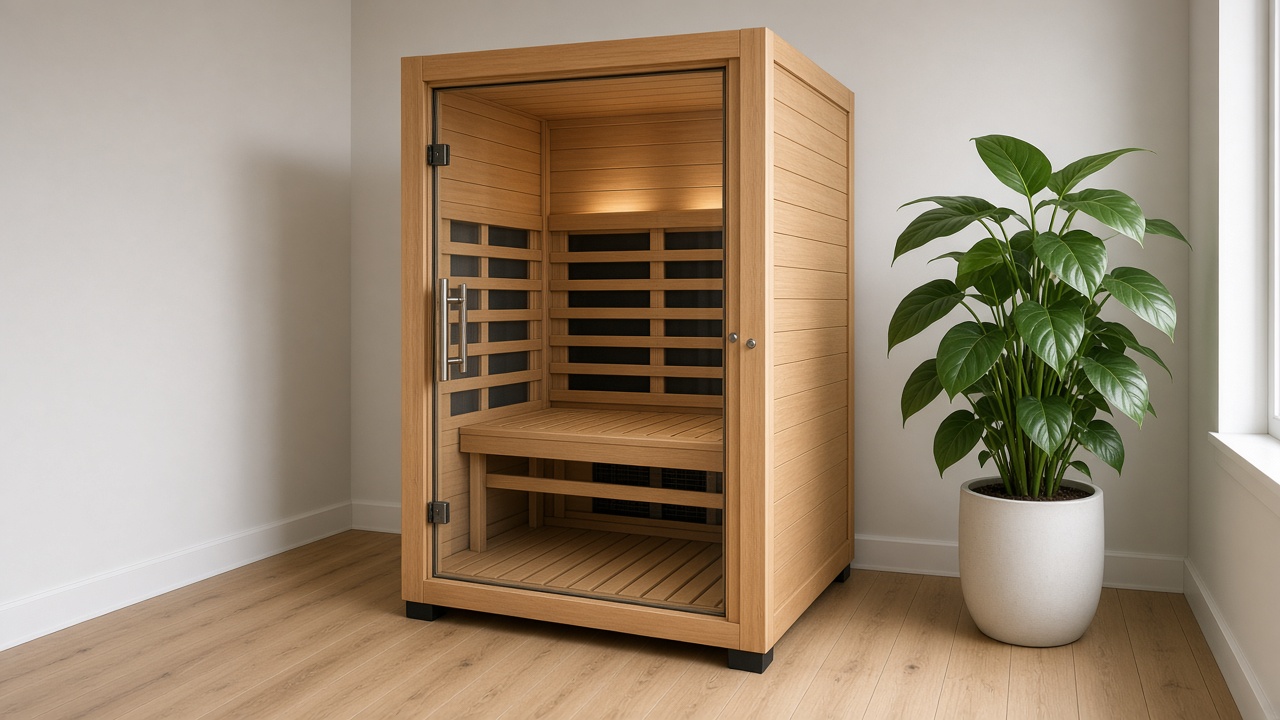
Example 1: A small infrared cabin (1,600 W)
The Dynamic Barcelona 1-2 person far-infrared sauna is listed at 120V / 15A, 1600 W by its retailer, with an ideal range of 118°F to 132°F and a maximum of 140°F.
Assume 45 minutes of heater time per session (about 15 minutes of warm-up plus a 30-minute session):
- Energy: 1.6 kW × 0.75 hours = 1.2 kWh per session
- Cost per session: 1.2 × $0.1816 = about $0.22
- Cost per month (17 sessions): about $3.78
- Cost per year: about $45
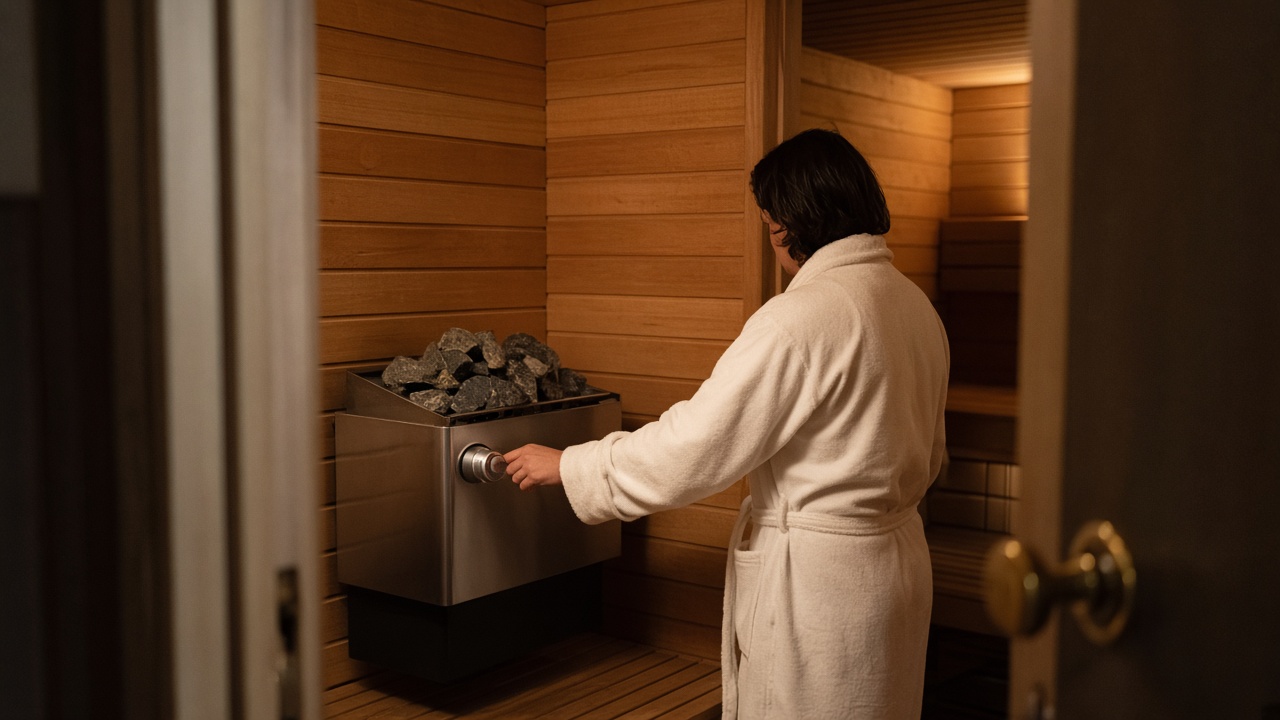
Example 2: A traditional 2-person indoor sauna (6 kW)
Almost Heaven lists its Hillsboro 2 Person Indoor Sauna with a 6kW, 240V Harvia heater on a 30-amp circuit. (We’ve reviewed the Almost Heaven Hillsboro here before.)
Traditional heaters need longer to warm the room. Harvia’s KIP heater manual tells owners to “allow at least 30 minutes for room to heat up to an average Sauna temperature.” So assume 30 minutes of warm-up plus a 20-minute session, or 50 minutes of heater time:
- Energy: 6 kW × 0.83 hours = 5.0 kWh per session
- Cost per session: 5.0 × $0.1816 = about $0.91
- Cost per month (17 sessions): about $15.74
- Cost per year: about $189
Example 3: Smaller and larger traditional heaters (4.5 kW and 8 kW)
The same Harvia KIP manual lists models rated at 4.5, 6.0 and 8.0 kW. Using the same 50-minute heater time:
- 4.5 kW: 3.75 kWh per session, about $0.68 per session or $11.80 a month
- 8 kW: 6.67 kWh per session, about $1.21 per session or $20.98 a month
Side-by-side summary
All figures use 18.16 cents per kWh and four sessions a week, and assume the heater draws full power the whole time.
| Heater | Heater time per session | kWh per session | Cost per session | Cost per month | Cost per year |
|---|---|---|---|---|---|
| Infrared, 1.6 kW | 45 min | 1.2 | $0.22 | $3.78 | $45 |
| Traditional, 4.5 kW | 50 min | 3.75 | $0.68 | $11.80 | $142 |
| Traditional, 6 kW | 50 min | 5.0 | $0.91 | $15.74 | $189 |
| Traditional, 8 kW | 50 min | 6.67 | $1.21 | $20.98 | $252 |
How Much Your State Changes the Bill
Here is the same 6 kW traditional sauna and 1.6 kW infrared cabin at a few state averages from the EIA’s August 2026 table, still at four sessions a week:
| State (Aug 2026 avg) | Infrared 1.6 kW per month | Traditional 6 kW per month |
|---|---|---|
| Louisiana (12.87¢) | $2.68 | $11.15 |
| Florida (14.99¢) | $3.12 | $12.99 |
| Texas (15.91¢) | $3.31 | $13.79 |
| U.S. average (18.16¢) | $3.78 | $15.74 |
| New York (28.65¢) | $5.96 | $24.83 |
| California (29.75¢) | $6.19 | $25.78 |
| Hawaii (47.18¢) | $9.81 | $40.89 |
State averages blend many utilities and plans, so treat these as a ballpark. Your bill’s rate is the number that counts.
Why These Numbers Are a Ceiling, Not a Forecast
The examples assume the heater runs flat out for every minute. In practice it usually doesn’t:
- Thermostats cycle. Once the room reaches your set temperature, the heater switches on and off to hold it, so it draws less than its full rating for part of the session.
- Lower settings use less. Harvia’s manual describes turning the heat control “back toward minimum setting, until desired temperature is reached” if the room is too hot. A cooler target means less run time.
- Your room matters. Insulation, door seals and ceiling height all affect how fast a room heats and how much heat it loses. The Harvia manual’s troubleshooting list includes checking for heat loss around the door and confirming the ceiling isn’t higher than 7 feet.
If you want a real measurement instead of an estimate, check your utility’s online usage data. Many utilities show usage by hour, so you can compare a sauna day with a non-sauna day.
Infrared vs Traditional: Why the Gap Is So Large
The examples show traditional saunas costing roughly three to four times more per session than a small infrared cabin. Two things drive that:
- Higher wattage. A traditional heater heats the air and the stones to much higher temperatures. Cleveland Clinic describes traditional saunas as typically heated between 150 F and 195 F, with infrared saunas typically between 110 F and 135 F.
- Longer warm-up. Heating a whole room of air and a load of stones takes more time than switching on infrared panels.
That doesn’t make one type “better.” Many people prefer the feel of a traditional sauna and the ability to pour water on the stones. If you’re still choosing, our guide to infrared sauna vs traditional sauna covers how the two compare beyond running costs.
Other Costs to Budget For
Electricity is only one line in the budget. Before you buy, plan for:
- Electrical work. A 6 kW heater like the one in the Hillsboro listing needs a 240V, 30-amp hard-wired connection. Small infrared cabins often plug into a dedicated 120V outlet instead. Get a quote from a licensed electrician, since this one-time cost can matter more than years of electricity. Our sauna installation guide covers what to plan for.
- Sauna stones. Traditional heaters need rocks that are loosely stacked. The Harvia manual notes that stones packed too tightly “restrict air flow and reduce heating capacity.”
- Light and controls. Interior lights, audio and control panels draw power too, but very little next to the heater.
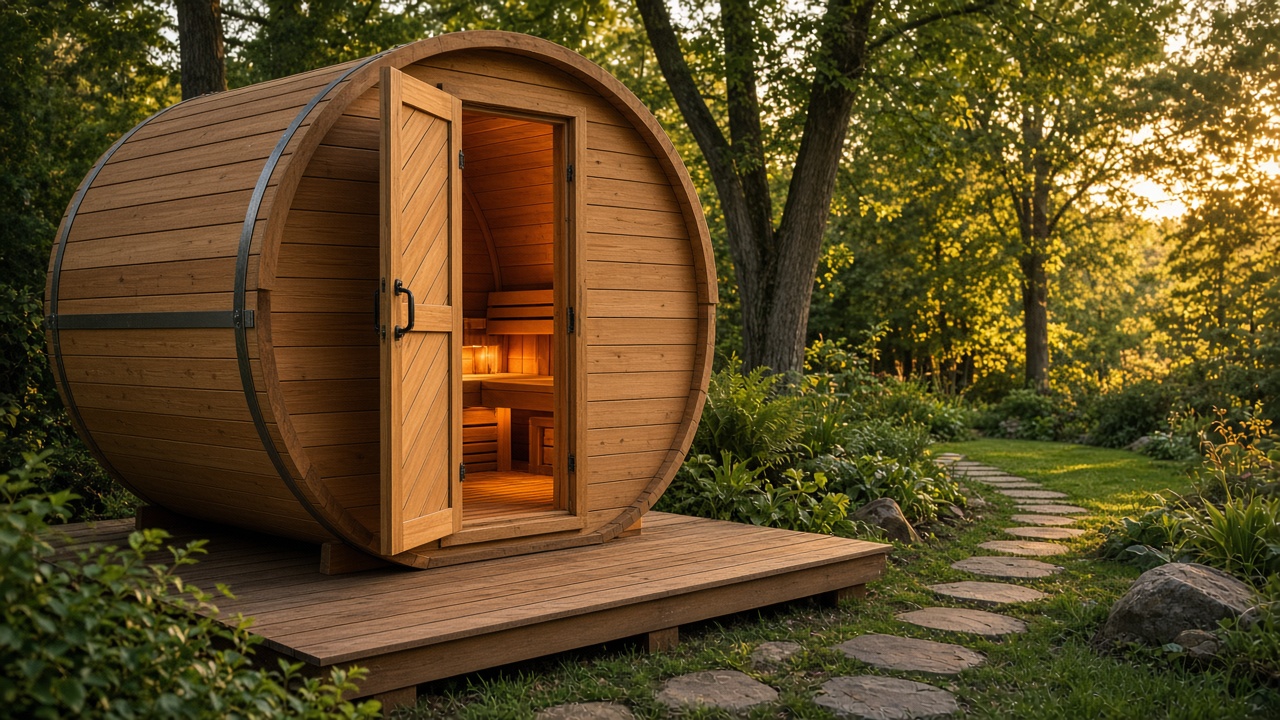
- Wood-burning heaters. These avoid electricity altogether, but firewood prices vary too much by region to estimate fairly. Factor in a chimney and the clearances the stove maker requires.
5 Ways to Lower the Cost to Run Your Sauna
- Shorten warm-up. Use a timer or delayed start so the heater turns on right before you need it, not an hour early. The Harvia KIP timer can preset start times up to 8 hours ahead.
- Pick a sensible temperature. You don’t have to run at the maximum. A slightly lower setting can still feel great and cuts run time.
- Keep the door closed during warm-up. Every peek lets hot air out.
- Check the seals and vents. Proper ventilation is required for safety, so don’t block vents, but do fix gaps around the door.
- Use off-peak rates. If your utility has time-of-use pricing, an evening or weekend session may cost less than one at peak hours.
If your budget is still tight, a smaller cabin or one of the best home saunas under $1000 may suit you better than a large traditional room.
FAQ
How much does it cost to run a sauna for an hour?
Multiply the heater’s kilowatts by your rate. At 18.16 cents per kWh, one hour at full power costs about $0.29 for a 1.6 kW infrared cabin and about $1.09 for a 6 kW traditional heater. Real use is often a little lower because the heater cycles.
Is an infrared sauna cheaper to run than a traditional sauna?
Usually, yes. Small infrared cabins draw less power and warm up faster. In our examples, a 1.6 kW infrared cabin cost about $0.22 per session versus about $0.91 for a 6 kW traditional heater at the same electricity rate.
Will a home sauna raise my electric bill a lot?
For most households using a sauna a few times a week, the added cost is modest: a few dollars a month for a small infrared cabin, and roughly $11 to $21 a month for a traditional heater at the U.S. average rate. High-rate states like California, New York and Hawaii will see more.
How can I find my exact cost?
Find your heater’s wattage on the spec sheet or label, note how long it runs each session including warm-up, and use the price per kWh from your bill. Then use the formula above.