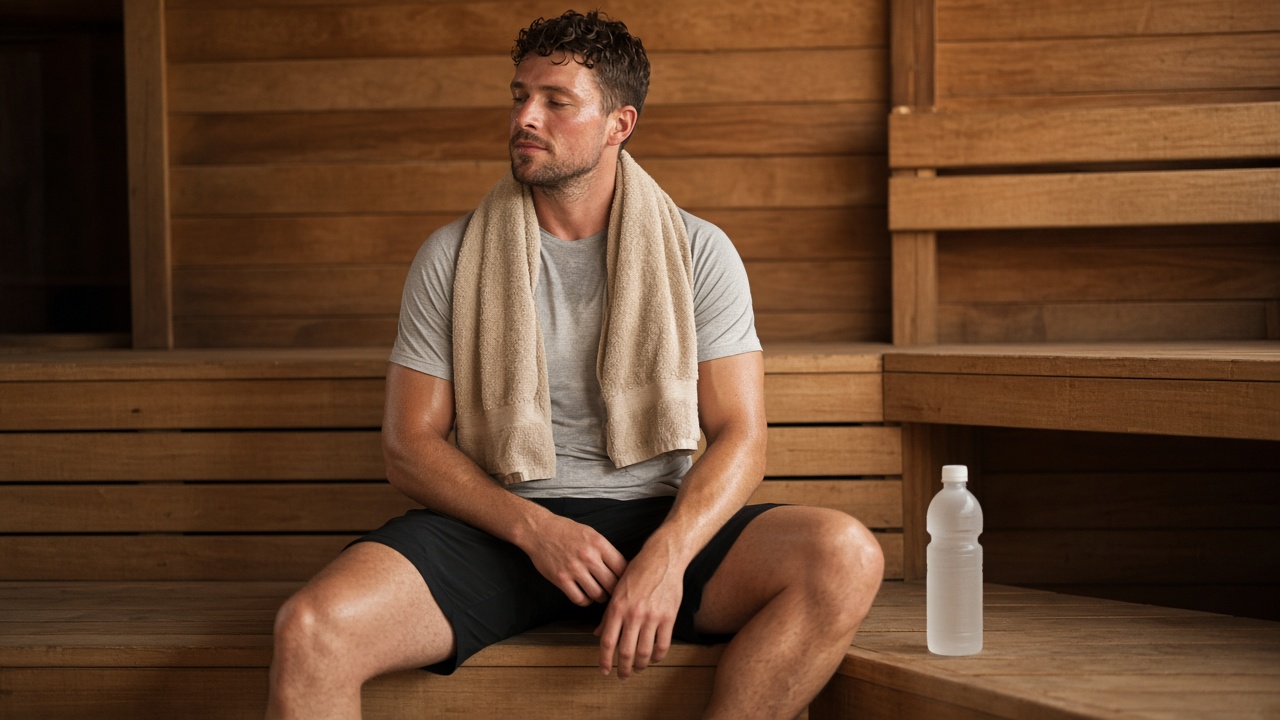
Quick answer: When it comes to timing a sauna before or after workout, most people are better off going after. A hot session beforehand can leave you dehydrated and tired before you start, and it doesn’t replace a proper warm-up. After training, once you’ve cooled down and had some water, a moderate sauna session may help you relax and, in a few small studies, recover. The main exception is a hard workout or race the next day, when one study found a hot sauna afterward made performance worse.
Here’s what the research actually shows, how to time a post-workout session, and who should skip it.
Sauna Before a Workout: What Happens
Sitting in a sauna raises your body temperature and heart rate and makes you sweat. That sounds like a warm-up, but it isn’t the same thing.
In an interview with Peloton, Essi K. Ahokas, a sauna researcher at the University of Jyväskylä in Finland, explained that sauna heat “doesn’t activate the neuromuscular system and might not be as effective as an active warm-up.” She also noted that pre-heating has been observed to decrease exercise time to exhaustion and lower self-paced effort in the heat (Peloton).
The other concern is fluid loss. Cleveland Clinic lists dehydration as one of the biggest risks with sauna use, and starting a workout already low on fluids makes it harder to train well and stay safe.
When a pre-workout sauna might make sense
The same Peloton article describes one niche case: athletes preparing for an event in very hot weather sometimes use repeated heat exposure in the weeks before to help their bodies adapt to heat. That’s a planned training strategy, not a pre-workout habit. If you do use a sauna before exercise, the expert advice in that article is to keep it short and the temperature mild.
Sauna Before or After Workout: What the Research Shows
Most of the research on sauna and exercise looks at post-workout use rather than pre-workout use. The studies are small, and the results point in different directions depending on the type of training.
4 studies worth knowing
| Study | Who | What they did | What they found |
|---|---|---|---|
| Mero et al., 2015 | 10 active men | 30 min far-infrared sauna (35–50°C) after strength or endurance training | No recovery difference after strength training; jump performance recovered better after endurance training |
| Ahokas et al., 2023 | 16 male basketball players | 20 min infrared sauna (about 43°C) vs. passive rest after resistance training | Less drop in jump performance, less muscle soreness and better perceived recovery; no negative effect on nighttime heart rate variability |
| Skorski et al., 2019 | 20 competitive swimmers and triathletes | 3 × 8 min traditional sauna (80–85°C) after intense training | Swim times the next morning were significantly worse, and athletes reported more stress |
| Scoon et al., 2007 | 6 male distance runners | About 30 min humid sauna after training for 3 weeks | Run time to exhaustion improved, likely linked to increased blood volume |
What that means in practice
- After strength training, a mild infrared session may help soreness, based on the 2023 basketball study. The 2015 study found no difference in recovery after strength work, so the effect isn’t guaranteed.
- Before a big day, be careful. The 2019 swimmer study authors concluded that athletes “should be careful with postexercise SAU if high-intensity training and/or competitions are scheduled on the following day.”
- For endurance training over weeks, the small 2007 runner study found a performance benefit from regular post-training sauna use.
Sauna after exercise and heart health
There’s also research on pairing regular exercise with sauna for general health. In an 8-week randomized trial of 47 adults with low activity levels and at least one heart disease risk factor, the group that added a 15-minute post-exercise sauna to their exercise program saw a greater improvement in cardiorespiratory fitness, lower systolic blood pressure and lower total cholesterol than the exercise-only group. It’s one small trial, but it suggests sauna may complement exercise rather than replace it. For more on this, see our article on sauna for heart health.
How to Use a Sauna After a Workout: 6 Steps
- Cool down first. Walk, stretch or spin easy until your breathing and heart rate settle. Going straight from a hard effort into high heat piles stress on stress.
- Drink water. Rehydrate before you go in, and bring water with you if your sauna allows it. Harvard Health suggests drinking two to four glasses of cool water after each sauna.
- Keep it short. Harvard Health advises staying in no more than 15–20 minutes. Cleveland Clinic suggests around 15 to 20 minutes and says new users may need to start with five minutes and build up.
- Choose a moderate temperature. The recovery benefits in the infrared studies came at mild temperatures (about 35–50°C). If you use a traditional sauna, sit on a lower bench where it’s cooler.
- Listen to your body. Cleveland Clinic advises leaving if you feel dizzy, weak, short of breath or unwell.
- Cool down gradually afterward. Harvard Health recommends cooling down gradually after a sauna. Some people like a cool shower or a cold plunge after the sauna, but go easy if you’re new to it.
New to saunas in general? Our guide on how to use a sauna covers the basics.
Sample Post-Workout Sauna Plans
These are simple starting points built from the guidance above, not prescriptions. Adjust them to how you feel, and keep every session within the 15–20 minute range health sources suggest.
| Your workout | Suggested approach | Why |
|---|---|---|
| Easy run, ride or walk | Cool down, drink water, then 10–15 min at a comfortable temperature | Light training leaves more room for heat, and the 2015 study saw better jump recovery after endurance work |
| Weight training | Cool down and rehydrate, then a mild session (infrared or a lower bench) for 10–20 min | The 2023 study found less soreness after a 20-minute mild infrared session |
| Very hard session with another hard one tomorrow | Keep it short and mild, or skip it | Swimmers performed worse the next morning after a hot sauna |
| First time using a sauna after exercise | Start with about 5 minutes and build up | Cleveland Clinic suggests new users start with five minutes |
What about sore muscles?
Many people head to the sauna simply because it feels good on tired muscles. The 2023 basketball study is the clearest evidence so far: players reported less severe muscle soreness and felt more recovered after a 20-minute infrared session than after resting. That’s a single small study of young male athletes, so results may differ for you. Warmth and relaxation are real perks, but a sauna doesn’t replace sleep, food and rest days.
Infrared or Traditional Sauna After Exercise?
The studies with the most positive recovery results used infrared saunas at mild temperatures. The study showing worse next-day performance used a traditional sauna at 80–85°C. That doesn’t prove one type is better, since the studies tested different people, workouts and temperatures, but it does suggest that gentler heat is the safer starting point after hard training.
Who Should Skip the Post-Workout Sauna
Exercise and sauna both strain your heart and fluid balance, so stacking them isn’t right for everyone. According to Cleveland Clinic, avoid the sauna if you’ve had a recent heart attack or stroke or have been drinking alcohol, and check with your healthcare provider first if you’re older than 65, under 16, pregnant or trying to get pregnant, or have certain heart conditions. Harvard Health adds that people with uncontrolled high blood pressure or heart disease should check with their doctors, and advises avoiding alcohol and medications that may impair sweating.
Also skip the sauna if you’re ill, already dehydrated or feel faint after your workout. For more, read our sauna safety tips for beginners.
FAQ
Is it better to use the sauna before or after a workout?
After, for most people. Using it before can leave you dehydrated and doesn’t replace an active warm-up. After a cool-down and some water, a short, moderate session is the more common approach.
How long should I stay in the sauna after a workout?
Harvard Health advises no more than 15–20 minutes, and Cleveland Clinic suggests starting with about five minutes if you’re new. Cool down and rehydrate before you go in.
Does a sauna help muscle growth?
There’s no good evidence that a sauna builds muscle. One small study found an infrared session after resistance training reduced soreness and helped jump performance recover, but that’s recovery, not growth.
Can a sauna after a workout hurt performance?
It can. In a 2019 study, swimmers who used a hot traditional sauna after intense training swam slower the next morning. If you have a hard session or competition the next day, keep it short and mild or skip it.
This article is general information, not medical advice. See our Medical Disclaimer.